EP 18 Decanting wine, what does it do? -Episode #18

2004 Amon Ra Shiraz

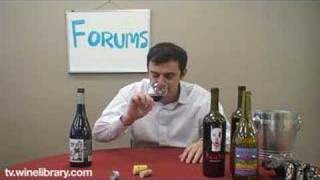
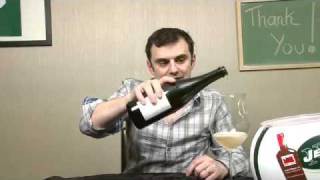
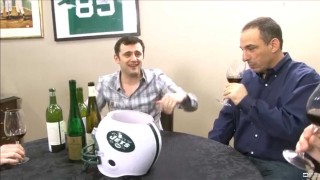
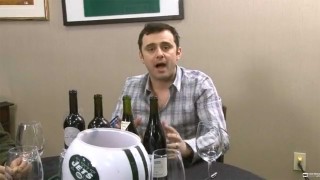
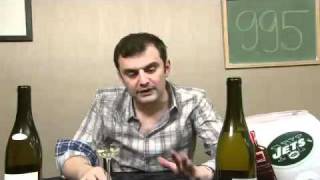
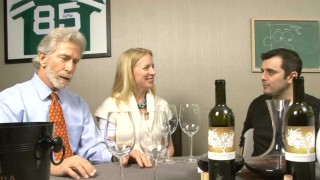
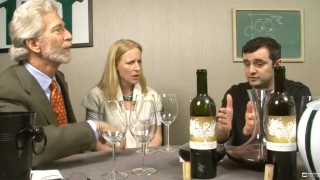
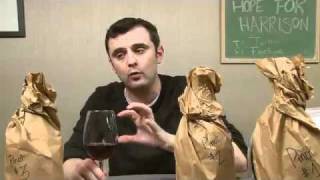
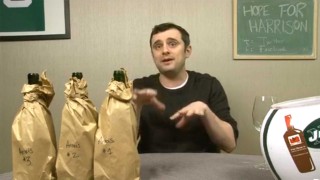
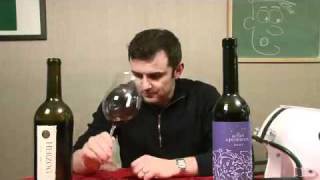
Watch as Gary Vaynerchuk demonstrates the value of decanting wines. Also we explore the wonderful wines of the Barrosa Valley (Australia’s “Napa valley”) with Amon Ra. Crafted by Ben Glatzer, Amon Ra stands among the greatest wines in the world.
Latest Comment:

View More

luca bercelli

92/100

line of the day – ‘If you’re going to get into serious wine, you’d better get serious.’

Great, great show. For those of us who have never decanted wine this is a real eye-opener. But the best thing about it is our introduction to GV’s easy cap-removal play. No more messing about – just yank the thing right off. I’ve been doing it with every bottle, ever since.

Tags: aussie, Australian, red wines, review, shiraz, Video

Episodes >


  • Eugene

    Gary, rally great educational episode.
    You mentioned that a lot of people emailing you, but I donâ??t see your email address anywhere.

  • Eugene

    Gary, rally great educational episode.
    You mentioned that a lot of people emailing you, but I donâ??t see your email address anywhere.

  • Pat

    Gary,

    Can you get a similar effect by just pouring the wine into wine glasses a couple of hours before dinner? Thanks for a great series of clips…I’ve enjoyed them all. You are certainly raising the bar.

  • Pat

    Gary,

    Can you get a similar effect by just pouring the wine into wine glasses a couple of hours before dinner? Thanks for a great series of clips…I’ve enjoyed them all. You are certainly raising the bar.

  • Guy

    Pat (and Gary),

    Just wanted to share a little trick I use at home that serves two purposes: both decanting and keeping unused wine from a newly opened bottom from oxidizing and saving it for drinking in the near future.

    For me, I consider a good serving/glass of wine to be 8 ounces. Therefore, a standard (750 ml bottle) of wine holds slightly over 3 pours (about 25 ounces total). To decant my young red wine for that evenings drinking and still preserve the remaining wine for future drinking, I open a new bottle of wine immediately upon arriving home from work. I pour the wine into two 8 ounce glass bottles as soon as I open the wine. I use narrow-neck 8 ounce used beverage bottles (Canada Dry seltzer bottles), but any narrow neck bottle will work. I fill the bottles near the top, somewhere up in the middle of the neck, and rescrew the cap onto it and then place both bottles in the refridgerator. The remaining wine, I instantly decant by pouring it into a large-bowled burgundy glass and let it breath/decant in the wine glass until I drink it with dinner. So that evening’s wine is allowed to breath/decant for anywhere from 1-4 hours.

    Why did I immediately pour the two servings into 8 ounce glass bottles, reseal, and place in the fridge, as soon as the bottle was opened. Because the remaining wine that I wouldn’t drink until subsequent evenings would be over-oxidized if I didn’t do this. There are many different methods for sale which are purported to preserve wine for future drinking by removing air (oxygen) from the unused portion of wine prior to storage (vacuum pumps, nitrogen blankets, etc.), but none of them seem to work too good and even if they did, they are more trouble to use than my method. By filling the bottles up to the neck and sealing, only the small portion of the unfilled section of the neck contains oxygen and it is not enough to oxidize the wine – in effect, I am replicating the actual conditions which occur in a bottle of wine before it is opened. Just make sure that you transfer the wine as soon as you open the new bottle, so that you limit the oxidization before getting the wine into the smaller bottles.

    Also, as would be obvious to any reader, you can adjust this procedure to fit the drinking quantity preferences you might have in your house. For example, if 2 people are drinking wine and you want approximately 6 ounce servings, then a 750 ml bottle pour 2 glasses of wine with 12 ounces left over, so use a single 12 ounce narrow-necked bottle to store the wine you won’t drink that evening.

    Some side notes. I use glass bottles to store my unused wine, but I don’t think storing in plastic bottles would impart any flavors to the leftover wine – you’d have to try it to see if this is so. Also, narrow-necked bottles are used to limit the amount of air/oxygen exposed to the wine in the temporary bottles. Also, I usually drink the remaining wine within the next few days. I do not recommend this method for storage of unused wine for longer than a week or two because it has been exposed to a small amount of oxygen during the transfer, because there is a small amount of “new oxygen” available in the neck of the new bottle, and because the screw top to the bottle is just being reused and therefore is not completely airtight.

  • Guy

    Pat (and Gary),

    Just wanted to share a little trick I use at home that serves two purposes: both decanting and keeping unused wine from a newly opened bottom from oxidizing and saving it for drinking in the near future.

    For me, I consider a good serving/glass of wine to be 8 ounces. Therefore, a standard (750 ml bottle) of wine holds slightly over 3 pours (about 25 ounces total). To decant my young red wine for that evenings drinking and still preserve the remaining wine for future drinking, I open a new bottle of wine immediately upon arriving home from work. I pour the wine into two 8 ounce glass bottles as soon as I open the wine. I use narrow-neck 8 ounce used beverage bottles (Canada Dry seltzer bottles), but any narrow neck bottle will work. I fill the bottles near the top, somewhere up in the middle of the neck, and rescrew the cap onto it and then place both bottles in the refridgerator. The remaining wine, I instantly decant by pouring it into a large-bowled burgundy glass and let it breath/decant in the wine glass until I drink it with dinner. So that evening’s wine is allowed to breath/decant for anywhere from 1-4 hours.

    Why did I immediately pour the two servings into 8 ounce glass bottles, reseal, and place in the fridge, as soon as the bottle was opened. Because the remaining wine that I wouldn’t drink until subsequent evenings would be over-oxidized if I didn’t do this. There are many different methods for sale which are purported to preserve wine for future drinking by removing air (oxygen) from the unused portion of wine prior to storage (vacuum pumps, nitrogen blankets, etc.), but none of them seem to work too good and even if they did, they are more trouble to use than my method. By filling the bottles up to the neck and sealing, only the small portion of the unfilled section of the neck contains oxygen and it is not enough to oxidize the wine – in effect, I am replicating the actual conditions which occur in a bottle of wine before it is opened. Just make sure that you transfer the wine as soon as you open the new bottle, so that you limit the oxidization before getting the wine into the smaller bottles.

    Also, as would be obvious to any reader, you can adjust this procedure to fit the drinking quantity preferences you might have in your house. For example, if 2 people are drinking wine and you want approximately 6 ounce servings, then a 750 ml bottle pour 2 glasses of wine with 12 ounces left over, so use a single 12 ounce narrow-necked bottle to store the wine you won’t drink that evening.

    Some side notes. I use glass bottles to store my unused wine, but I don’t think storing in plastic bottles would impart any flavors to the leftover wine – you’d have to try it to see if this is so. Also, narrow-necked bottles are used to limit the amount of air/oxygen exposed to the wine in the temporary bottles. Also, I usually drink the remaining wine within the next few days. I do not recommend this method for storage of unused wine for longer than a week or two because it has been exposed to a small amount of oxygen during the transfer, because there is a small amount of “new oxygen” available in the neck of the new bottle, and because the screw top to the bottle is just being reused and therefore is not completely airtight.

  • GeneV

    Gary,

    Really enjoy your video, and I like the home-brew quality of it. A few points:

    1. Syrah/Shiraz was a great pick for a presentation on decanting. I have found this varietal to be the most responsive to decanting. Syrah seems to take an hour of air to bloom. For example, try decanting an inexpensive blend such as Trentham Murphy’s Lore (Shiraz/Cabernet Sauvignon). If you sip this wine out of the bottle, it is all Cabernet. After decanting an hour, the Shiraz takes over and the Cab is just an interesting hint.

    2. I think the favorable comments on decanting are a bit oversimplified. Many wines improve but many wines can get worse with decanting. Bordeaux blends are a mixed bag. For example, inexpensive(

  • GeneV

    Gary,

    Really enjoy your video, and I like the home-brew quality of it. A few points:

    1. Syrah/Shiraz was a great pick for a presentation on decanting. I have found this varietal to be the most responsive to decanting. Syrah seems to take an hour of air to bloom. For example, try decanting an inexpensive blend such as Trentham Murphy’s Lore (Shiraz/Cabernet Sauvignon). If you sip this wine out of the bottle, it is all Cabernet. After decanting an hour, the Shiraz takes over and the Cab is just an interesting hint.

    2. I think the favorable comments on decanting are a bit oversimplified. Many wines improve but many wines can get worse with decanting. Bordeaux blends are a mixed bag. For example, inexpensive(

  • Jeff

    This was probably the most useful episode ever! I will definitely pick up a decanter now. Does it matter the type of decanter? I see wide bottom ones, and also ones similar to what you used in this episode? The wide bottom seems to expose the wine to more oxygen, but it is a pain to clean.
    Do you suggest pouring back and forth from bottle to decanter to expose to air more rapidly?

    Thanks!!!!

  • Jeff

    This was probably the most useful episode ever! I will definitely pick up a decanter now. Does it matter the type of decanter? I see wide bottom ones, and also ones similar to what you used in this episode? The wide bottom seems to expose the wine to more oxygen, but it is a pain to clean.
    Do you suggest pouring back and forth from bottle to decanter to expose to air more rapidly?

    Thanks!!!!

  • Jim

    Gary,

    Wow, what a valuable resource, especially for me…a relative newcomer to
    wine tasting and collecting. What amazes me is the seemingly endless array
    of sensory perceptions there are. I would like to see an episode explaining
    how one acquires the nose and palate to be able to pick out the various
    aromas and tastes. Sometimes I can identify a specific fruit or “scent” if
    it really stands out, but if it is a complex wine, I’m basically lost.
    Perhaps this could be addressed in a future episode, as I am sure there are
    many people like me who are very eager to develop their sensory abilities.

    Thanks for the excellent information….can’t wait for the next episode.

    Regards,

    Jim

  • Jim

    Gary,

    Wow, what a valuable resource, especially for me…a relative newcomer to
    wine tasting and collecting. What amazes me is the seemingly endless array
    of sensory perceptions there are. I would like to see an episode explaining
    how one acquires the nose and palate to be able to pick out the various
    aromas and tastes. Sometimes I can identify a specific fruit or “scent” if
    it really stands out, but if it is a complex wine, I’m basically lost.
    Perhaps this could be addressed in a future episode, as I am sure there are
    many people like me who are very eager to develop their sensory abilities.

    Thanks for the excellent information….can’t wait for the next episode.

    Regards,

    Jim

  • Sven Nyvist

    Interesting presentation–although oversimplified, I think. I’d wager that 9.5 times out of 10, most cheap wines, let’s say most wines under $20, DO NOT improve with decanting. Saying that the wine improves with decanting is like saying that “cheap” wines will improve with age–it just isn’t so. Perhaps it is folly to suggest otherwise (or sales hype). I find that decanting is most effective with well crafted, richly extracted, and lightly filtered/lightly fined wines–as opposed to bulk processed wines. Unfiltered and unfined wines do particularly well with a little air. On the other hand, let’s not kind ourselves–if the wine ain’t good when you open it, it ain’t gonna get much better with a whole lotta air. Furthermore, every few years, it seems, the magic of decantly seems to take on an aspect of folklore, or old wives tales–“Decant your wine and they’ll get so much more good and better.” Again, most wines, the wines that the “average” consumer might enjoy, will not improve significantly with extended aeration (decanting). Finally, prematurely decanting and drinking a wine that the wine maker has categorically stated should be aged for another 2-5 years before drinking it, is like taking cash out of your pocket and setting it on fire.

  • Sven Nyvist

    Interesting presentation–although oversimplified, I think. I’d wager that 9.5 times out of 10, most cheap wines, let’s say most wines under $20, DO NOT improve with decanting. Saying that the wine improves with decanting is like saying that “cheap” wines will improve with age–it just isn’t so. Perhaps it is folly to suggest otherwise (or sales hype). I find that decanting is most effective with well crafted, richly extracted, and lightly filtered/lightly fined wines–as opposed to bulk processed wines. Unfiltered and unfined wines do particularly well with a little air. On the other hand, let’s not kind ourselves–if the wine ain’t good when you open it, it ain’t gonna get much better with a whole lotta air. Furthermore, every few years, it seems, the magic of decantly seems to take on an aspect of folklore, or old wives tales–“Decant your wine and they’ll get so much more good and better.” Again, most wines, the wines that the “average” consumer might enjoy, will not improve significantly with extended aeration (decanting). Finally, prematurely decanting and drinking a wine that the wine maker has categorically stated should be aged for another 2-5 years before drinking it, is like taking cash out of your pocket and setting it on fire.

  • Robert Sacks

    Response to episode # 15:
    Gary,
    A refreshingly honest discussion/tasting of 90 point wines. Bravo for your refusal to be a slave to the ratings even though your business depends heavily on them. You can’t give wines under 90 points away and you can’t keep them in stock if they are over 90 points! This episode certainly boosted the credibilty of your palate impressions as a guide for those consumers who are seeking unbiased buying advice from their merchant rather than an impersonal critic/ wine writer. A real throwback to the old style wine shop where the owner would direct the customers to wines he felt they would enjoy based on his own experiences which rarely, if ever, included tasting 200 or more wines in a a couple of hectic hours, but rather, a gradual accumulation of the knowledge of what constitutes well made wines. Keep up the good work!. I look forward to following your future recommendations in the hopes that I will discover some new and interesting wines with you as my ‘point man’.Happy to have you wade through the sea of wine out there and then have you offer us what you think we will enjoy.Thanks.

  • Robert Sacks

    Response to episode # 15:
    Gary,
    A refreshingly honest discussion/tasting of 90 point wines. Bravo for your refusal to be a slave to the ratings even though your business depends heavily on them. You can’t give wines under 90 points away and you can’t keep them in stock if they are over 90 points! This episode certainly boosted the credibilty of your palate impressions as a guide for those consumers who are seeking unbiased buying advice from their merchant rather than an impersonal critic/ wine writer. A real throwback to the old style wine shop where the owner would direct the customers to wines he felt they would enjoy based on his own experiences which rarely, if ever, included tasting 200 or more wines in a a couple of hectic hours, but rather, a gradual accumulation of the knowledge of what constitutes well made wines. Keep up the good work!. I look forward to following your future recommendations in the hopes that I will discover some new and interesting wines with you as my ‘point man’.Happy to have you wade through the sea of wine out there and then have you offer us what you think we will enjoy.Thanks.

  • Sven I have decanted over 30 wines under $12 in the last few weeks getting ready for this video and I have to tell you everyone did better after 2 hrs +….EVERYONE. I know it may sound strange and I didn’t think so myself but I disagree I think all wines get value from air!

  • Sven I have decanted over 30 wines under $12 in the last few weeks getting ready for this video and I have to tell you everyone did better after 2 hrs +….EVERYONE. I know it may sound strange and I didn’t think so myself but I disagree I think all wines get value from air!

  • Steve

    It would seem that if some wines benefit greatly from decanting for a few hours that this would negate the desireability of bringing such a bottle to a restaurant where ” a few hours of breathing” would be problematic given the time constraints of dining. Any solutions?

  • Steve

    It would seem that if some wines benefit greatly from decanting for a few hours that this would negate the desireability of bringing such a bottle to a restaurant where ” a few hours of breathing” would be problematic given the time constraints of dining. Any solutions?

  • garyv

    Steve many people have opened and decanted wine and then poured back into the bottle before going out. I have seen it more and more! Ordering the bottle as soon as you get there is also a great way to go, before everyone is seated. Finally many serious wine drinkers call the place in advance and look at the list and have then decant it hours before they get there!

  • garyv

    Steve many people have opened and decanted wine and then poured back into the bottle before going out. I have seen it more and more! Ordering the bottle as soon as you get there is also a great way to go, before everyone is seated. Finally many serious wine drinkers call the place in advance and look at the list and have then decant it hours before they get there!

  • Michael Polanco

    Gary,
    I agree with your theory on decanting. All wines, no matter the quality, price, terroir etc..will benefit from decanting for the simple reason that they all have one thing in common: bouquet. Bouquet’s need air to open fully releasing the true character of the wine. The difference will be more noticeable in some than others.
    I do have one question though. Since I’ve built my cellar I’ve noticed the big difference in drinking wine that has been kept at 56 degrees compared to room temperature. So would it be ok to decant then put it back in the cellar until your ready to drink it?
    I look forward to hearing from you. Keep up the great work!

  • Michael Polanco

    Gary,
    I agree with your theory on decanting. All wines, no matter the quality, price, terroir etc..will benefit from decanting for the simple reason that they all have one thing in common: bouquet. Bouquet’s need air to open fully releasing the true character of the wine. The difference will be more noticeable in some than others.
    I do have one question though. Since I’ve built my cellar I’ve noticed the big difference in drinking wine that has been kept at 56 degrees compared to room temperature. So would it be ok to decant then put it back in the cellar until your ready to drink it?
    I look forward to hearing from you. Keep up the great work!

  • Linda Prior

    You are amazing. It’s so much fun watching and
    listening to you. I am learning so much.

  • You are amazing. It’s so much fun watching and
    listening to you. I am learning so much.

  • Joe

    What Great TV! I usually decant only wines of 10+ years to separate the sediment. I think you haved opened a lot of eyes. What do you think of doing an analogous show about wine Glasses. Have one bottle of wine and pour into 4 very different wine glasses and study the impact of glass structure on taste and aroma? I think the viewers would be amazed by the difference a large finely-crafted glass can have vs the “typical” smaller, thicker, leaded glasses most of us get as wedding presents. I have only one type of fine red wine glass (Bordeaux type glass) – I would love to see/hear you describe the difference between drinking a Caymus in a Reidel Bordeaux vs Reidel Burgundy glass.

  • Joe

    What Great TV! I usually decant only wines of 10+ years to separate the sediment. I think you haved opened a lot of eyes. What do you think of doing an analogous show about wine Glasses. Have one bottle of wine and pour into 4 very different wine glasses and study the impact of glass structure on taste and aroma? I think the viewers would be amazed by the difference a large finely-crafted glass can have vs the “typical” smaller, thicker, leaded glasses most of us get as wedding presents. I have only one type of fine red wine glass (Bordeaux type glass) – I would love to see/hear you describe the difference between drinking a Caymus in a Reidel Bordeaux vs Reidel Burgundy glass.

  • mark

    How about a winelibrarytv/mythbusters crossover episode on decanting? =) Looks like you’ve stirred something up here today, Gary. I’m planning on stopping by today to pick up a couple bottles of 2up shiraz ($12.99, for you Sven) and tomorrow, we are going to duplicate your experiment. I’ll post our results on this page. On another note, this also brings up something interesting. When at a restaurant and the waiter lets me taste the wine before serving the rest, how can I confidently make an accurate judgment at that moment when it hasn’t even had a chance to breathe? Would it be insulting to request a bottle, that I’m familiar with, to be opened in advance when making a reservation at a restaurant? Thanks Gary!

  • mark

    How about a winelibrarytv/mythbusters crossover episode on decanting? =) Looks like you’ve stirred something up here today, Gary. I’m planning on stopping by today to pick up a couple bottles of 2up shiraz ($12.99, for you Sven) and tomorrow, we are going to duplicate your experiment. I’ll post our results on this page. On another note, this also brings up something interesting. When at a restaurant and the waiter lets me taste the wine before serving the rest, how can I confidently make an accurate judgment at that moment when it hasn’t even had a chance to breathe? Would it be insulting to request a bottle, that I’m familiar with, to be opened in advance when making a reservation at a restaurant? Thanks Gary!

  • GeneV

    Mark,

    When a waiter asks you to taste the wine before the others, he is usually not asking you whether you like it, but whether it is spoiled (corked, brett, etc.) You can tell corked wine right away.

  • GeneV

    Mark,

    When a waiter asks you to taste the wine before the others, he is usually not asking you whether you like it, but whether it is spoiled (corked, brett, etc.) You can tell corked wine right away.

  • GeneV

    Gary,

    I am a big fan of decanting, and I really enjoy your blog, but, again, one size does not fit all. Try this: Decant a 2000 Dame de Montrose for an hour or so and compare it to the same wine without decanting. If you don’t have one in the store, I’ll send you a bottle. Numerous folks on another forum have had exactly the same experience with this wine–the wine is much worse after decanting, but (oddly) better again the second day.

  • GeneV

    Gary,

    I am a big fan of decanting, and I really enjoy your blog, but, again, one size does not fit all. Try this: Decant a 2000 Dame de Montrose for an hour or so and compare it to the same wine without decanting. If you don’t have one in the store, I’ll send you a bottle. Numerous folks on another forum have had exactly the same experience with this wine–the wine is much worse after decanting, but (oddly) better again the second day.

  • mark

    Thanks for the reply GeneV. I am actually a newbie, so I honestly don’t have enough experience to tell a corked wine from another. However, I have come across a couple of wines that made me initially wonder if they were spoiled, only to find out that they actually tasted better as time went on.

    As I write this, we’ve just completed our experiment on two bottles of 2up shiraz (a blind tasting at that), between the 3 of us here. One bottle was decanted for a good 3 hrs or so. To sniff and taste them sequentially might not be the best way to do this. However, doing this side by side, sniffing back and forth and tasting them, produces more obvious results. The decanted wine gave off a much more layered, complex scent than the more alcoholic, “thinner” smelling glass. But then again, I cannot ignore the bias in my head that “I must convince myself that the decanted wine should have X and X characteristics”. GeneV, any other suggestions for us? Thanks!

  • mark

    Thanks for the reply GeneV. I am actually a newbie, so I honestly don’t have enough experience to tell a corked wine from another. However, I have come across a couple of wines that made me initially wonder if they were spoiled, only to find out that they actually tasted better as time went on.

    As I write this, we’ve just completed our experiment on two bottles of 2up shiraz (a blind tasting at that), between the 3 of us here. One bottle was decanted for a good 3 hrs or so. To sniff and taste them sequentially might not be the best way to do this. However, doing this side by side, sniffing back and forth and tasting them, produces more obvious results. The decanted wine gave off a much more layered, complex scent than the more alcoholic, “thinner” smelling glass. But then again, I cannot ignore the bias in my head that “I must convince myself that the decanted wine should have X and X characteristics”. GeneV, any other suggestions for us? Thanks!

  • Kirk

    Great Episode, I am a huge fan of decanting for the young for air, and old for sediment.

  • Kirk

    Great Episode, I am a huge fan of decanting for the young for air, and old for sediment.

  • David

    Gary,

    Great job with the Wine Library TV. I think I’m going to try using a decanter when I share my wines with my family this Easter. Possibly the Arrowood or Remirez de Ganuza. I think this would be a great opportunity to taste the difference between a freshly opened bottle and one that was in a decanter for three to four hours. Again Gary, great job and keep on smelling, sipping and spitting. Hope to meet you in the store of these days to personally thank you for doing a great job.

  • David

    Gary,

    Great job with the Wine Library TV. I think I’m going to try using a decanter when I share my wines with my family this Easter. Possibly the Arrowood or Remirez de Ganuza. I think this would be a great opportunity to taste the difference between a freshly opened bottle and one that was in a decanter for three to four hours. Again Gary, great job and keep on smelling, sipping and spitting. Hope to meet you in the store of these days to personally thank you for doing a great job.

  • Steve

    Got a question. How are you guys decanting for 3-4 hrs and still keeping your reds at a recomended drinking temp of ~65f? I cellar my wine at 55f and find that left to decanter for 3-4 hrs leaves my reds at a room temp of ~ 75f when it comes to drinking time (I live in Fl). I have tried putting my decanted wine in my cellar instead of leaving it in the kitchen but this seems to result in moisture forming in the decanter. Any ideas?

  • Steve

    Got a question. How are you guys decanting for 3-4 hrs and still keeping your reds at a recomended drinking temp of ~65f? I cellar my wine at 55f and find that left to decanter for 3-4 hrs leaves my reds at a room temp of ~ 75f when it comes to drinking time (I live in Fl). I have tried putting my decanted wine in my cellar instead of leaving it in the kitchen but this seems to result in moisture forming in the decanter. Any ideas?

  • daniel

    I finally opened a bottle of 1998 Grange 3 nights ago. It was a long anticipated treat. I found the wonderful wine peaked in 90-120 minutes of decanting. I left nearly a full glass to the 4 hour mark and was very dissappointed. It had over-oxidized and gotten shallow. I was shocked that a wine like ’98 Grange did not improve with time. Who would’ve guessed?

  • daniel

    I finally opened a bottle of 1998 Grange 3 nights ago. It was a long anticipated treat. I found the wonderful wine peaked in 90-120 minutes of decanting. I left nearly a full glass to the 4 hour mark and was very dissappointed. It had over-oxidized and gotten shallow. I was shocked that a wine like ’98 Grange did not improve with time. Who would’ve guessed?

  • MonkeyK

    Wow, I really liked this show. It is the first Wine Library TV that I have seen and came across it when googling for info on how long to decant wine.

    Anyway that is my question, Is there a way to figure out how long to decant wine for? The wine I was getting ready was a 2002 Sebastiani Sonoma County Cabernet. I really like the wine, but find that it gets better for every day that it is opened (wife and I drink a glass each with dinner, so it only stays opened for three days).

    Is there a rule of thumb for how much effect to expect from decanting (1 hour = 1 day?).

    On the day in question, I decanted for 3 hours and the sweetness in the wine really came out, but then I made the mistake of serving it a bit too warm and it wound up tasting a bit thin.

  • MonkeyK

    Wow, I really liked this show. It is the first Wine Library TV that I have seen and came across it when googling for info on how long to decant wine.

    Anyway that is my question, Is there a way to figure out how long to decant wine for? The wine I was getting ready was a 2002 Sebastiani Sonoma County Cabernet. I really like the wine, but find that it gets better for every day that it is opened (wife and I drink a glass each with dinner, so it only stays opened for three days).

    Is there a rule of thumb for how much effect to expect from decanting (1 hour = 1 day?).

    On the day in question, I decanted for 3 hours and the sweetness in the wine really came out, but then I made the mistake of serving it a bit too warm and it wound up tasting a bit thin.

  • JohnX

    Gary, you have truly opened my eyes. Since watching this episode I have decanted every wine I purchase, whether it be a $100 fine or a $4 cleanskin… all improved.
    I do tend to stick to Australian wine though, especially barossa or Mclaren Vale, maybe this explains my experiences.

  • JohnX

    Gary, you have truly opened my eyes. Since watching this episode I have decanted every wine I purchase, whether it be a $100 fine or a $4 cleanskin… all improved.
    I do tend to stick to Australian wine though, especially barossa or Mclaren Vale, maybe this explains my experiences.

  • This is by far my favorite episode…it is truly the first WLTV episode I ever watched, and the one that got me hooked.

    B

  • This is by far my favorite episode…it is truly the first WLTV episode I ever watched, and the one that got me hooked.

    B

Close

Not Subscribed to WLTV yet?

Never miss an episode and get notifications on the hottest wine deals!

No thanks.